Winter Welding Checks: The Essential Seasonal Inspection Guide That Prevents Failures, Injuries, and Downtime
Cold weather changes everything about welding. Metal behaves differently, equipment performs unpredictably, consumables degrade faster, and the human body becomes a less reliable tool when fingers are numb and visibility is reduced by breath fog inside a helmet. Winter welding checks are the systematic inspections and adjustments that welders, shop managers, and field crews perform before and during cold-weather operations to ensure weld quality stays high, equipment stays functional, and people stay safe. Skipping these checks doesn’t just risk a bad bead — it risks cracked joints, hydrogen-induced failures, costly rework, and serious jobsite injuries. Whether you’re running a heated fabrication shop that still drops to 40°F near the bay doors or welding structural steel outdoors in January, this guide covers every inspection point you need to address before striking an arc in cold conditions.
The stakes are real. The American Welding Society and most structural welding codes set strict preheat and interpass temperature requirements precisely because cold base metals reject quality welds. This isn’t a suggestion — it’s metallurgical physics, and winter is when it matters most.
Why Cold Weather Compromises Weld Quality
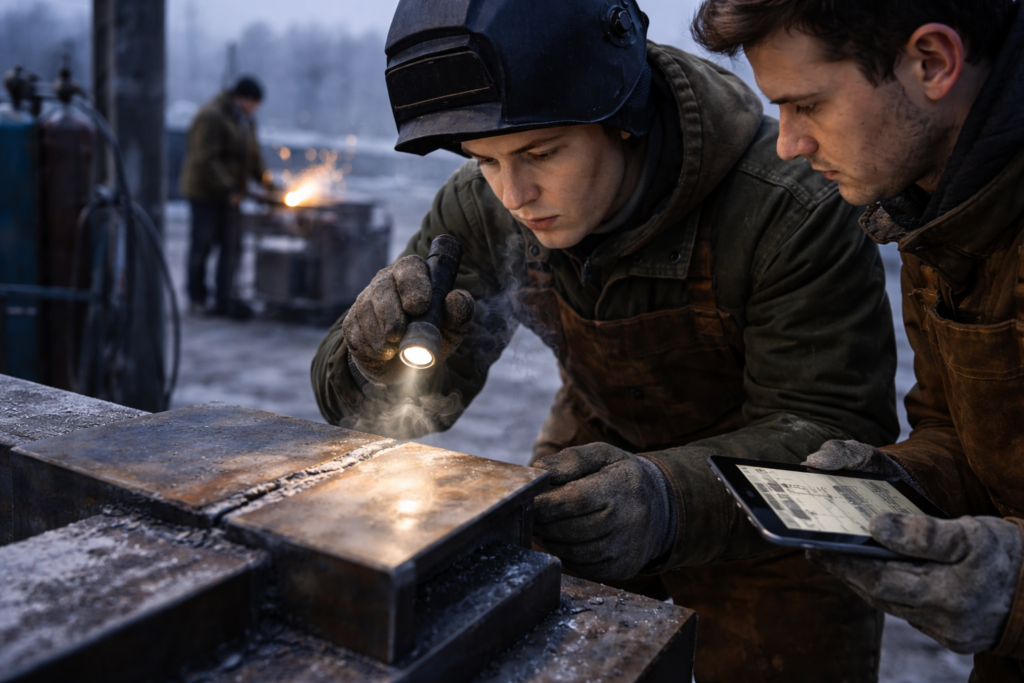
Understanding the science behind cold-weather welding problems makes every check on this list feel less like bureaucratic overhead and more like essential protection for your work.
When base metal is cold, it acts as a massive heat sink. The weld puddle loses thermal energy rapidly, which accelerates the cooling rate of the weld and the surrounding heat-affected zone (HAZ). Fast cooling promotes the formation of hard, brittle microstructures — particularly martensite in carbon and low-alloy steels — that are far more susceptible to cracking under stress. Hydrogen, which naturally enters the weld pool through moisture in the atmosphere, on the metal surface, or in the consumables, becomes trapped in these rapidly cooled microstructures instead of diffusing out harmlessly. The result is hydrogen-induced cracking (also called cold cracking or delayed cracking), one of the most dangerous and difficult-to-detect weld defects in structural fabrication.
Beyond metallurgy, cold temperatures affect gas flow rates, wire feed consistency, electrical connections, flux moisture content, and the welder’s own manual dexterity and decision-making. Every one of these factors can degrade weld quality independently. In winter, they compound.
Pre-Season Equipment Inspection
Before the first hard freeze arrives, every piece of welding equipment in your shop or on your truck should go through a thorough seasonal inspection.
Power Sources and Wire Feeders
Cold temperatures thicken lubricants inside wire feed mechanisms, increase resistance in electrical connections, and can cause condensation inside power source enclosures when equipment is moved between heated and unheated environments. Inspect all cable connections for corrosion, tightness, and insulation integrity. Corroded or loose connections create resistance, which generates heat at the connection point rather than at the arc — reducing welding performance and creating a fire hazard. Check wire feed rollers and drive systems for wear. A feed mechanism that performed adequately in warm weather may slip, stutter, or bird-nest in cold conditions when wire stiffness increases and lubricant viscosity rises. Replace worn rollers, liners, and contact tips before the season begins rather than troubleshooting mid-project.
Gas Delivery Systems
Shielding gas regulators and flowmeters are particularly vulnerable to cold-weather issues. Moisture inside regulators can freeze, blocking or restricting gas flow at the worst possible moment — mid-weld. Inspect all regulators, hoses, and fittings for damage, leaks, and moisture intrusion. If your operation uses CO₂ shielding gas, be aware that CO₂ cylinders are especially prone to regulator freeze-up because the gas undergoes significant cooling as it expands from liquid to gas phase. Heated regulators or insulated regulator covers are a worthwhile investment for any shop or field operation that welds with CO₂ or CO₂-rich mixed gases in cold environments.
Leads, Cables, and Connectors
Cable insulation becomes stiff and brittle in freezing temperatures. Cracks in cable jackets expose bare copper, creating shock hazards and arc points. Walk every foot of your welding leads and ground cables before winter arrives. Flex them, inspect them visually, and replace any cable that shows cracking, cuts, exposed conductor, or damaged connectors. Pay special attention to the ground clamp — a poor ground connection amplifies every other problem on this list.
Material Storage and Preparation
The condition of your base metals and consumables when they reach the welding station determines your starting quality floor. In winter, that floor drops fast if storage isn’t managed.
Base Metal Conditioning
Steel stored outdoors or in unheated areas accumulates moisture, frost, and condensation. Welding on a cold, wet surface is one of the fastest paths to porosity and hydrogen cracking. AWS D1.1 (Structural Welding Code — Steel) requires that base metal surfaces be dry and free of moisture and frost before welding. In practice, this means inspecting every piece of steel before it goes on the table and removing any visible moisture, ice, or condensation with dry heat — a rosebud torch, infrared heater, or heated blanket.
Preheat requirements also become critical in winter. Many welding codes specify minimum preheat temperatures based on material thickness, carbon equivalent, and ambient conditions. A joint that requires 200°F preheat in July still requires 200°F preheat in January — but reaching that temperature takes longer, uses more fuel, and requires more careful verification with a temperature-indicating crayon or infrared thermometer. Never assume the metal is “warm enough.” Measure it, document it, and re-check it if there’s a delay between preheat and welding.
Filler Metal and Flux Storage
Low-hydrogen electrodes (E7018 and similar classifications) are among the most cold-sensitive consumables in any welding operation. These electrodes are manufactured with carefully controlled low-moisture coatings that minimize hydrogen pickup in the weld. But they’re also hygroscopic — they absorb moisture from the air. Once they’ve picked up excessive moisture, they deposit hydrogen directly into your weld pool, defeating their entire purpose.
In winter, humidity levels inside unheated storage areas can be deceptively high as temperature fluctuations cause condensation cycling. Store low-hydrogen electrodes in a rod oven maintained at the manufacturer’s recommended holding temperature (typically 250°F to 300°F). Electrodes that have been exposed to uncontrolled conditions for more than a few hours should be reconditioned per the manufacturer’s specifications or discarded entirely. Flux for submerged arc welding demands identical care — moisture-contaminated flux produces the same hydrogen problems as wet rod coatings.
Solid and flux-cored wire spools stored in cold, damp environments can develop surface oxidation and moisture films that cause feeding problems and porosity. Keep spools sealed in their original packaging until use and store them in a climate-controlled area whenever possible.
Shop and Jobsite Environment Controls
Indoor Shop Conditions
Even heated shops develop cold zones in winter. Areas near bay doors, loading docks, exterior walls, and overhead doors can sit 20 to 40 degrees below the thermostat reading at the center of the shop. If welding stations are located in these zones, weld quality suffers from the same cold-base-metal dynamics that affect outdoor work — just less obviously.
Monitor temperatures at the actual welding station, not at the thermostat. Use portable heaters, insulated curtains, or welding screens with thermal barriers to create warm micro-environments around critical workstations. Ensure that heating equipment doesn’t create fire hazards near flammable materials, compressed gas cylinders, or solvent storage.
Outdoor Field Conditions
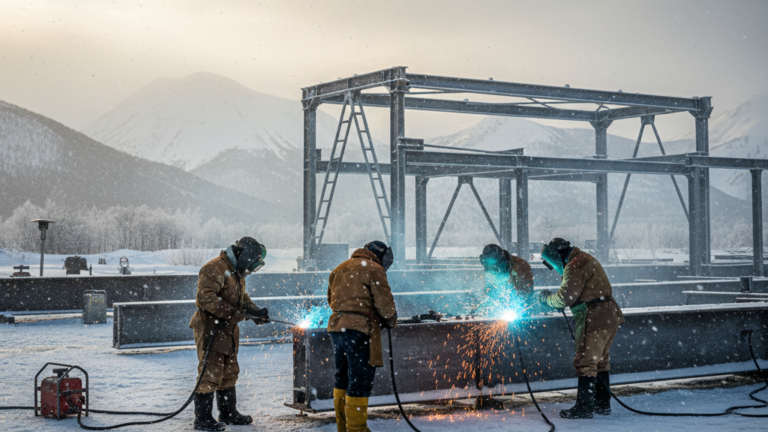
Field welding in winter is where every cold-weather challenge converges. Wind strips heat from the joint and disrupts shielding gas coverage. Snow and rain introduce moisture directly onto the weld. Frozen ground makes grounding difficult. Reduced daylight compresses productive working hours.
Wind screens and welding enclosures are essential — not optional — for outdoor winter welding. Even moderate wind at cold temperatures can pull enough heat from a weld joint to cause incomplete fusion or cracking that passes visual inspection but fails under load. Temporary heated enclosures maintain workable ambient temperatures around the joint and allow preheat and interpass temperatures to be maintained without constant reapplication.
Welder Safety in Cold Conditions
Cold stress, reduced dexterity, and limited visibility are the three human-factor risks that spike during winter welding.
Cold stress and hypothermia develop insidiously during long shifts in unheated or partially heated environments. Welders focused on a joint often don’t notice their core temperature dropping until cognitive function and fine motor skills are already impaired. Establish mandatory warm-up breaks, provide heated break areas, and train crews to recognize early symptoms of cold stress in themselves and their coworkers.
Reduced dexterity from cold hands directly impacts weld quality. Thick insulated gloves protect against frostbite but can reduce the fine motor control needed for precise torch manipulation and wire feeding. Invest in welding gloves designed for cold weather that balance thermal protection with tactile sensitivity. Some operations use heated glove liners or chemical hand warmers inside outer gloves for extended outdoor work.
Visibility drops when breath condensation fogs the inside of welding helmets. Anti-fog lens covers, helmet ventilation systems, and heated lens kits address this problem. Fogged visibility leads to poor arc control, inconsistent travel speed, and missed defects during in-process visual inspection — all quality killers that show up downstream as rejects.
Slip and fall hazards also increase dramatically in winter. Ice on scaffolding, frost on steel surfaces, and snow on access paths create treacherous conditions for workers carrying heavy equipment and operating near energized electrical circuits. Anti-slip footwear, treated walking surfaces, and rigorous housekeeping protocols are baseline winter safety requirements.
Post-Weld Winter Inspection Adjustments
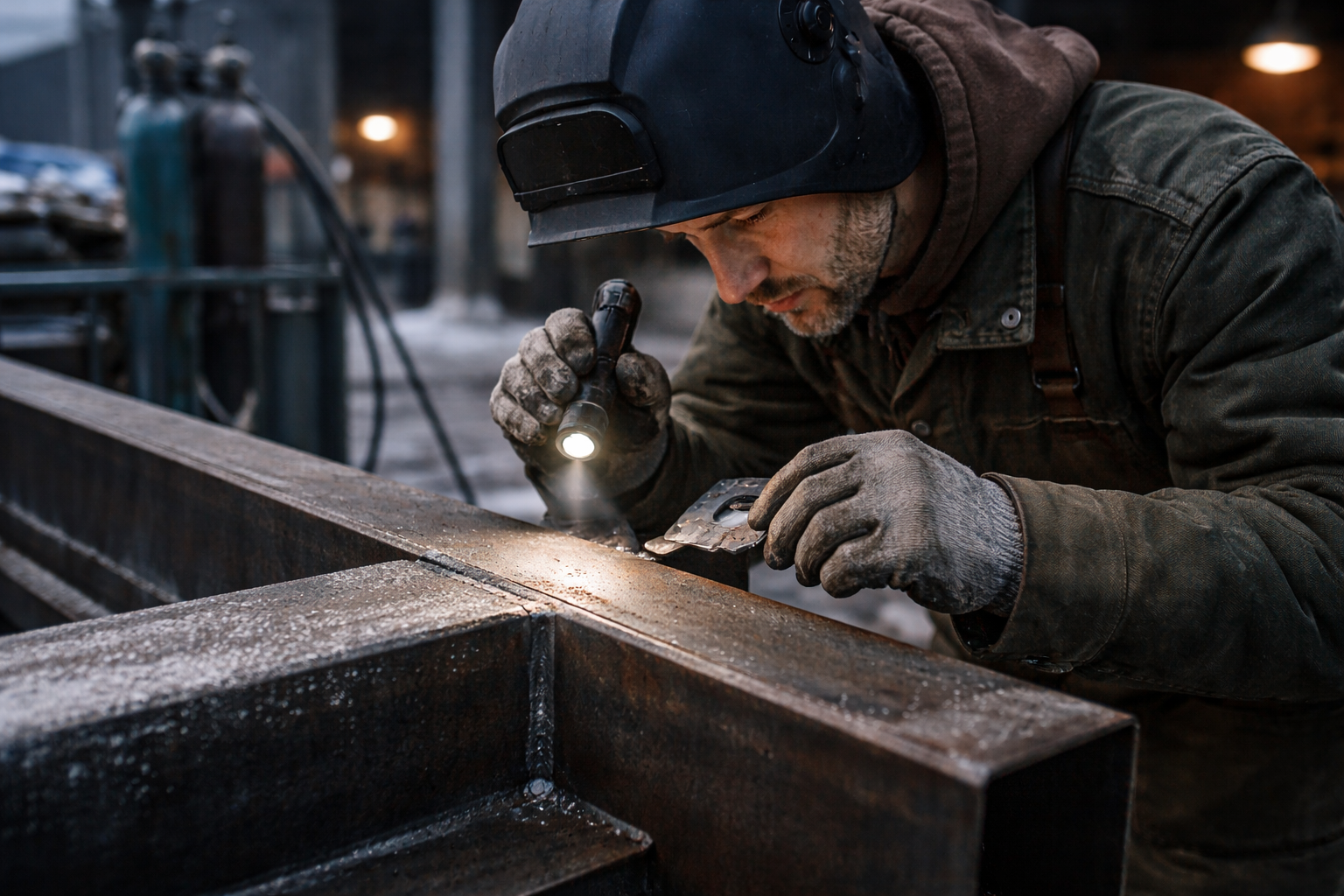
Cold-weather welds deserve closer scrutiny during quality inspection. Hydrogen-induced cracking — the signature cold-weather defect — can develop hours or even days after the weld is completed. This delayed cracking means a weld that looks perfect immediately after deposit can crack overnight as hydrogen migrates through the cooling microstructure.
For critical structural welds performed in cold conditions, extend your post-weld inspection timeline. Many codes and project specifications require a 24- to 48-hour hold before final non-destructive examination (NDE) on welds made below certain ambient temperatures. Ultrasonic testing (UT) and magnetic particle inspection (MPI) are the most effective methods for detecting subsurface hydrogen cracks that visual inspection alone will miss.
Document ambient temperature, preheat temperature, interpass temperature, and consumable lot numbers for every weld made during winter operations. If a defect surfaces weeks or months later, this documentation allows you to trace the root cause and determine whether other welds made under similar conditions need re-inspection.
Frequently Asked Questions
What are winter welding checks?
Winter welding checks are systematic inspections of equipment, materials, consumables, shop conditions, and safety protocols performed before and during cold-weather welding operations. Their purpose is to prevent cold-related weld defects such as hydrogen cracking, porosity, and incomplete fusion while protecting welder safety in hazardous winter conditions.
At what temperature is it too cold to weld?
Most structural welding codes, including AWS D1.1, prohibit welding when the ambient temperature at the weld location falls below 0°F (−18°C) without approved protective measures. However, weld quality can be compromised at temperatures well above that threshold if preheat, shielding gas, and consumable storage protocols aren’t adjusted for cold conditions. Many fabricators implement enhanced winter procedures at any ambient temperature below 50°F (10°C).
Why does cold weather cause weld cracking?
Cold base metal accelerates the cooling rate of the weld and heat-affected zone, promoting the formation of hard, brittle microstructures. Simultaneously, moisture from condensation, frost, and improperly stored consumables introduces hydrogen into the weld pool. Hydrogen becomes trapped in the rapidly cooled microstructure and creates internal pressure that leads to hydrogen-induced cracking — often hours or days after the weld was made.
How should I store welding rods in winter?
Low-hydrogen electrodes (such as E7018) must be stored in a rod oven at the manufacturer’s recommended temperature, typically 250°F to 300°F. Electrodes exposed to uncontrolled ambient conditions for more than the allowed exposure time should be reconditioned per the manufacturer’s guidelines or replaced. Never store electrodes in unheated sheds, truck beds, or open jobsite trailers during winter.
Do I need to preheat metal before welding in winter?
Yes — preheat is critical in cold weather and is required by code for many material types and thicknesses. Preheating slows the cooling rate of the weld, allows hydrogen to escape, and reduces the risk of cracking. Always verify preheat temperature with a calibrated instrument, not by touch, and re-check if there’s a delay between preheat and welding.
How do I prevent my welding gas regulator from freezing?
Regulator freeze-up occurs when moisture inside the regulator or gas line freezes during the pressure drop as gas flows through the system. CO₂ and CO₂-rich gas mixtures are most susceptible. Use heated regulators, insulated regulator covers, or install an inline gas heater. Keep cylinders stored upright in a dry area and inspect regulators for moisture intrusion before each use.
Don’t Let Winter Compromise Your Welds — Prepare Now
Every check on this list exists because someone, somewhere, learned the lesson the hard way — through a failed inspection, a cracked joint under load, or an injury that could have been prevented. Cold weather doesn’t pause your project schedule, but it absolutely changes the rules of the game.
Schedule your pre-winter equipment inspection and consumable audit today. Whether you need a full shop readiness assessment, cold-weather procedure development, or certified winter welding training for your crew, our team is ready to help you weld through the toughest months of the year with zero compromise on quality or safety. Contact us for a free consultation and make this the winter nothing cracks.